🌟 Introduction
A Story About a Happy Star of the Sea!
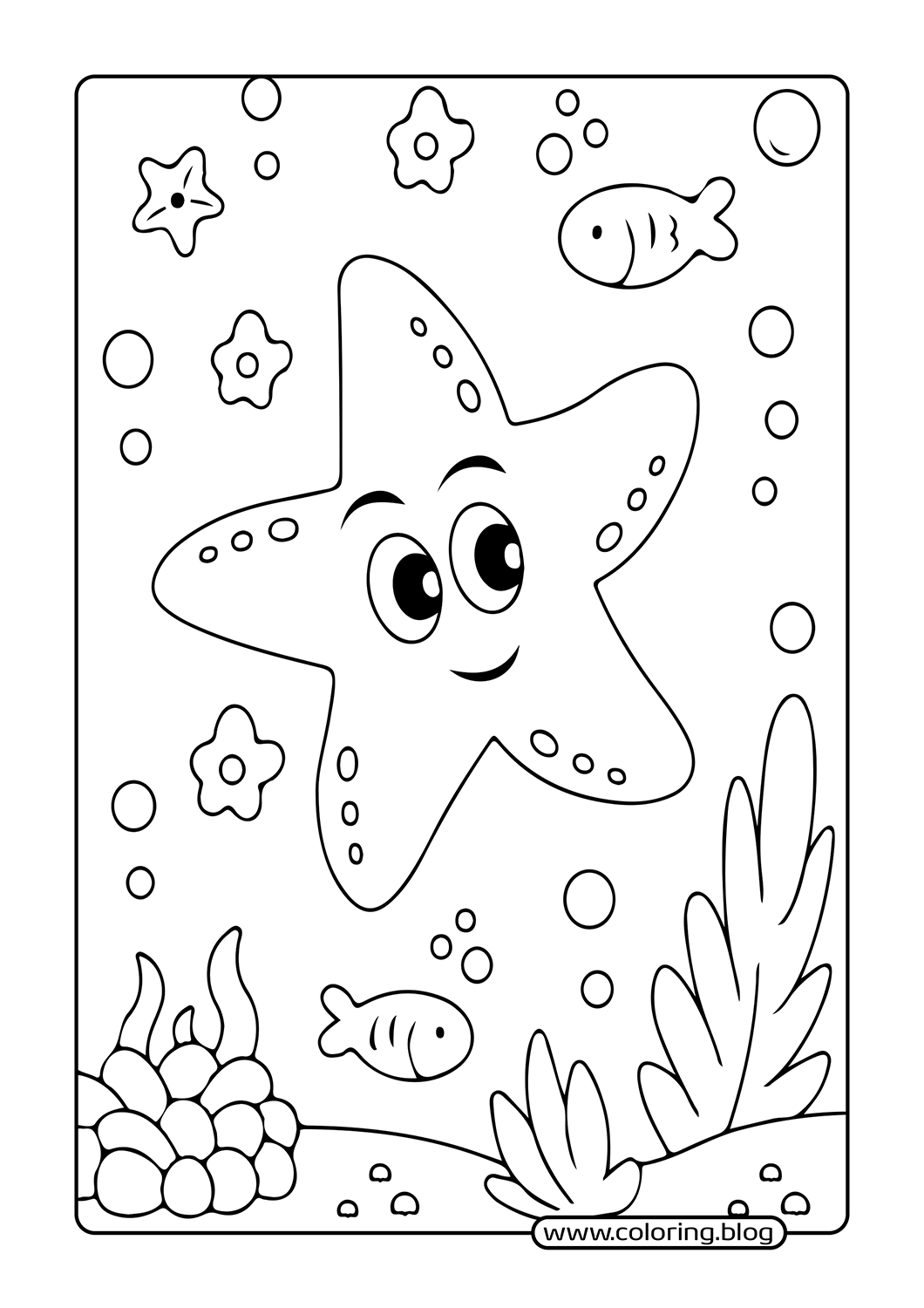
Hello, little deep-sea divers! Look who's here – it's Twinkle, the friendliest starfish in the whole ocean, and he's got the biggest smile! Twinkle loves to spend his days waving his five arms, greeting all his fishy friends, and sparkling under the gentle ocean waves.
He's surrounded by happy little fish, bubbly water, and beautiful underwater plants and shells. What bright and cheerful colors will you choose to make Twinkle shine like a real star and bring his bubbly underwater world to life? Let's make this picture sparkle with joy!
🌟 Creative Coloring Guide
1. Color Suggestions:
Twinkle the Starfish: Starfish come in many amazing colors! You can make Twinkle a sunny yellow, a warm orange, a lovely pink, or even a vibrant blue or purple. The little dots on his body could be a contrasting color or left white.
The Friendly Fish: The two little fish can be super colorful! Maybe one is bright blue and the other is a happy red, or both are striped with different colors.
Underwater Plants & Shells: The plants and corals can be various shades of green, red, orange, or even purple to make the seabed look lively. The little shells on the sand could be light brown or cream.
The Ocean Water: A beautiful light blue or a clear turquoise would be perfect for the sparkling ocean water.
The Bubbles: The bubbles can be left white or given a very faint touch of light blue to make them look shiny and translucent.
2. Where to Start?
Step 1: Let's begin with our star of the sea, Twinkle the starfish! Choose a bright color that makes him glow.
Step 2: Next, color in Twinkle's fishy friends and all the other interesting things on the seabed: the plants, corals, and shells.
Step 3: Finally, fill in the lovely ocean water and the floating bubbles. Coloring the background last helps your colorful sea friends truly stand out!
3. Creative Tips:
Sparkly Dots: If you have glitter pens or crayons, use them on the little dots on Twinkle's body to make him truly sparkle like a star!
Layered Water: You can use a lighter blue at the top of the water and gradually make it a little darker as you go down to show the depth of the ocean.
Ocean Textures: Use short, gentle strokes for the seabed to give it a sandy or pebbly look, and use wavy strokes for the plants to show them moving with the water.