🌟 Introduction
A Story of Fast and Slow Friends!
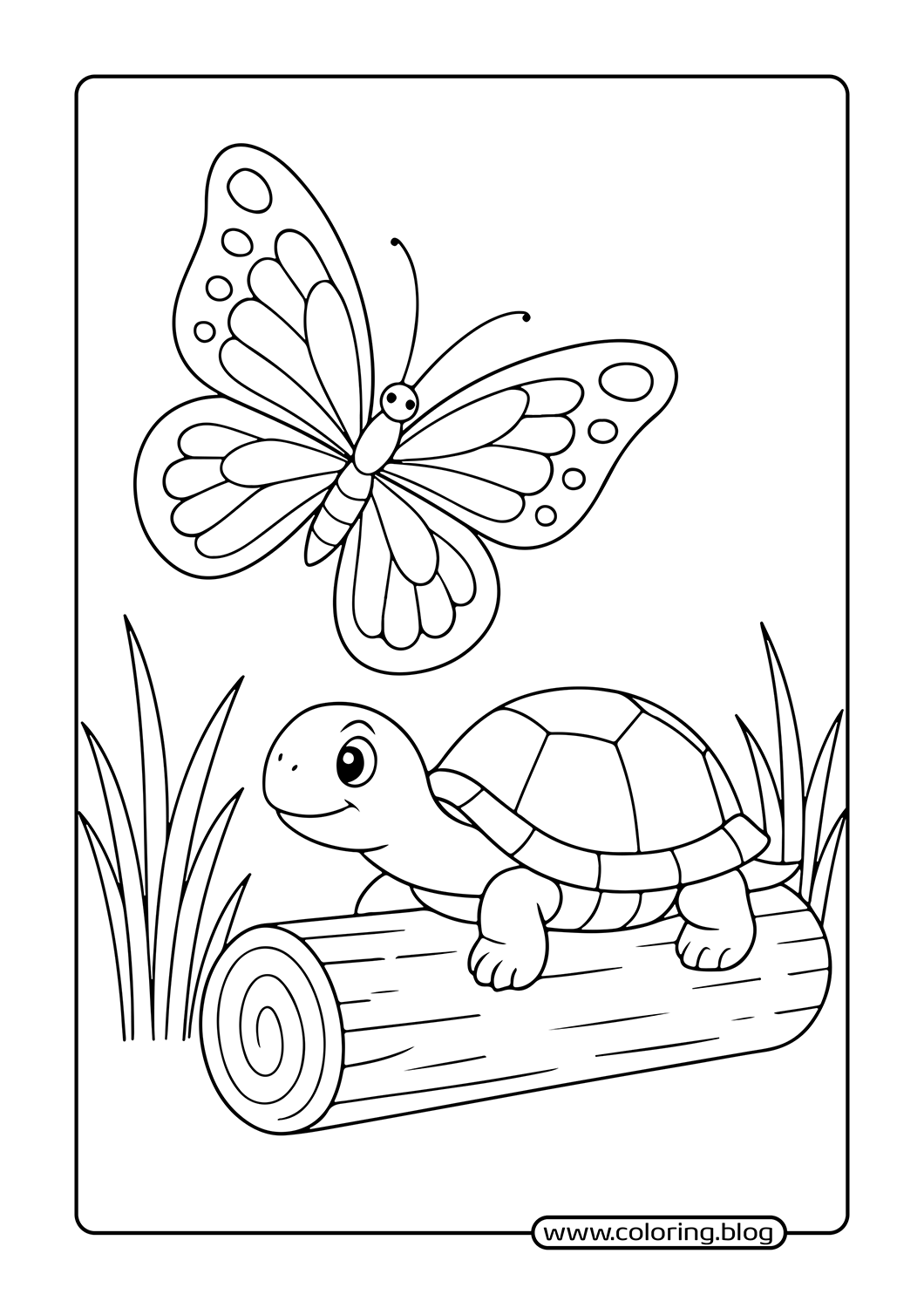
Hello, nature explorers! Look at this sweet scene where two very different friends are enjoying a sunny day! We have Timmy, the cheerful little turtle, slowly making his way across a big log. And fluttering above him is Bella, the beautiful butterfly, gracefully dancing in the air!
Timmy might be slow, but he's very steady and happy, while Bella is quick and light. They are both enjoying the lovely green grass and warm sunshine. What bright, contrasting, or harmonious colors will you choose to make Bella's wings shine and Timmy's shell look strong and colorful? Let's bring this lovely outdoor friendship to life!
🌟 Creative Coloring Guide
1. Color Suggestions:
Bella the Butterfly: Butterflies are bursting with colors! You can make Bella's wings any vibrant combination you like: bright blues and yellows, sparkling purples and pinks, or classic orange and black. Her body could be light brown or gray.
Timmy the Turtle: Timmy's shell can be shades of green (like olive green or dark green) with lighter green or yellow-green for his skin. His tummy might be a light cream color.
The Log: The log where Timmy is resting can be shades of brown, from light beige to dark bark brown, to show its woody texture.
The Grass: The grassy patches can be various shades of green, like a fresh spring green or a deeper meadow green.
2. Where to Start?
Step 1: Let's begin with Bella the butterfly! Choose dazzling colors for her wings to make her truly stand out in the sky.
Step 2: Next, color Timmy the turtle, focusing on his strong shell and friendly face.
Step 3: Then, bring the log to life with earthy brown tones.
Step 4: Finally, fill in the grassy areas, making them look lush and inviting.
3. Creative Tips:
Patterned Wings: For Bella's wings, you can add tiny dots, swirls, or even glitter if you have it, to make her wings look extra magical and patterned!
Textured Shell: Use different shades of green or brown on Timmy's shell sections to give it a cool, slightly bumpy texture.
Wood Grain: When coloring the log, use strokes that follow the lines of the wood to make it look like real bark and wood grain.